
Phigros
PigeonGamesMusic
4.6778.00 Reviews
- Version
- 4.0.1.2
- Installs
- 1.00M
- Age Rating
- Everyone
Screenshots
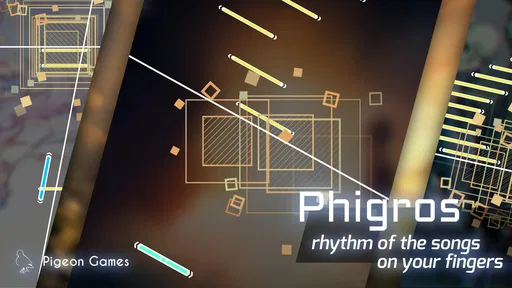
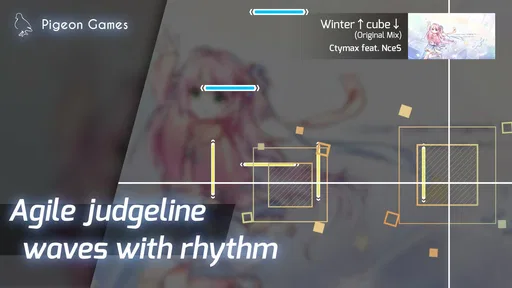
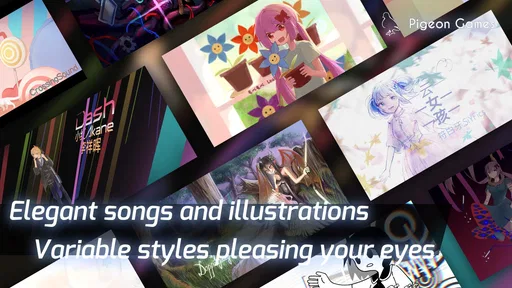
Our Review of Phigros
 Analysis by Appyee
Phigros is the kind of rhythm game I recommend when ordinary falling-note lanes have started to feel predictable. Developed by PigeonGames, it takes the basic pleasure of matching taps to music and places it in a more active, less settled play space. The result is free to try, rated for Everyone, and easy to approach at first, but it has enough timing pressure and visual movement to keep asking more from you as your skill improves.
I spent time with it as both a quick music game and a title worth practicing seriously. My first impression was that it does not behave like a passive playlist with buttons attached. I had to watch the playfield, listen for changes, and react to notes that did not always arrive in the same comfortable pattern. That makes it exciting, although it also means the game can feel demanding sooner than a casual player might expect.
How to decide whether Phigros fits you
The main question is not simply whether you enjoy music games. It is whether you want a game that treats timing as a visual and physical challenge rather than a routine finger exercise. If you like learning chart patterns, replaying a song to improve a result, and gradually turning confusion into muscle memory, this is a strong candidate. If you mainly want to relax with familiar songs and minimal concentration, another type of music app may suit you better.
The unusual presentation is central to the decision. Instead of giving me a permanently fixed note highway, the game makes the judgment area and incoming notes feel more dynamic. I cannot rely on looking at one predictable spot and tapping by habit. I have to read what is happening in front of me, which gives successful runs a satisfying sense of control.
That design also affects the learning curve. A player who already understands rhythm-game basics will probably recognize the logic quickly, but mastering the harder patterns still takes repetition. Newcomers should expect a short adjustment period, especially if they are used to games where every note travels down a simple vertical lane. The early challenge is not only finger speed; it is learning where to focus.
What I look for during a first session
When I test a rhythm game, I pay attention to three things: whether the timing feels readable, whether mistakes teach me something, and whether replaying a track feels worthwhile. Phigros performs well on the first and third points when the device responds cleanly. Its visual presentation gives me enough information to anticipate patterns, while the changing layouts prevent a song from becoming completely automatic after one attempt.
The second point depends on how patiently I approach it. A missed note can come from poor timing, but it can also come from watching the wrong region of the screen or reacting to a pattern instead of listening to the beat. That makes practice more useful than simply repeating the same movement. I often improve faster when I identify the type of mistake rather than blaming my fingers.
The best way to judge Phigros is to treat the first few plays as reading practice, not as a test of reflexes. I found that lowering my urge to chase a perfect result made the charts easier to understand. Once the visual language became familiar, the same songs felt less chaotic and more like carefully designed sequences.
How the music-game loop works in everyday use
Phigros works particularly well in short sessions. I can play a track while taking a break, then stop without needing to commit to a long campaign-style session. A quick attempt is enough to remind me of a pattern, while a longer session gives me room to refine accuracy. That flexibility makes it easier to fit into a commute or an evening break, provided I can play with sound or reliable headphones.
A realistic routine would be to choose one song that feels comfortable, one that exposes a weakness, and one that is just beyond current ability. The comfortable track helps me settle into the timing. The difficult one shows whether I am improving at reading. The aspirational choice gives the session a clear target without turning every attempt into frustration. This three-step rotation is more useful than jumping randomly between songs.
I also prefer using the game when I can give it my full attention. The moving visual elements are part of the challenge, so playing while distracted by conversation or notifications makes the experience noticeably worse. It is not a title I would choose when I want something to run in the background. Its strengths appear when I actively watch and listen.
Why the presentation changes the way I play
The most distinctive quality is the relationship between music and motion. Notes do not feel like objects traveling through a single unchanging corridor. The playfield can ask me to shift my attention, follow a new direction, or respond to a pattern that looks different from what came before. This gives the charts personality, but it also removes some of the comfort found in more conventional rhythm games.
That difference matters when comparing categories of alternatives. A traditional lane-based game may be better for someone who wants a stable visual grammar and a straightforward path toward faster songs. Phigros is better for someone who sees the interface itself as part of the performance. I enjoy that extra layer because it makes each chart feel like a small visual composition instead of only a sequence of inputs.
There is a trade-off, though. A creative layout can make a song memorable, but it can also make a first attempt feel visually busy. Players with limited screen space, tired eyes, or a preference for simple interfaces may find the presentation less comfortable. I would not choose it solely because I want the clearest possible lane display.
Small techniques that make difficult charts more manageable
One useful habit is to watch the judgment area and the note movement together instead of staring at individual notes. Looking too far ahead can make me late; looking only at the point of contact can leave me unprepared for the next pattern. I get better results by allowing my peripheral vision to track incoming shapes while my attention stays near the moment of input.
Another technique is to separate accuracy problems from coordination problems. If I consistently tap early or late, I need to listen more carefully and settle into the beat. If my timing is acceptable but I lose control during dense sequences, I need to practice the hand movement and visual reading separately. This distinction prevents wasted attempts and makes improvement easier to notice.
I also recommend replaying a section mentally after a failed run. Rather than immediately starting again, I ask whether the problem came from a sudden change, a repeated pattern, or a moment when I stopped listening. That short pause often gives the next attempt a purpose. It is a simple approach, but it turns Phigros from a reaction test into a game of analysis and refinement.
Where Phigros wins against familiar alternatives
Its biggest advantage is identity. Many music games can provide tapping, but Phigros gives me a reason to pay attention to how the chart is presented. The shifting visual structure makes the act of playing feel more expressive, and the challenge is not reduced to increasing speed. I am learning a visual language as well as following a beat.
It also wins on accessibility of entry. The game is free, so I can install it without first deciding whether a purchase is justified. Its Everyone age rating makes it suitable for a broad audience, although younger players may still need help understanding that advanced charts require patience rather than immediate success. The game has reached more than a million installs and holds a four-and-a-half average from roughly thirty-five thousand ratings, which suggests that its unusual approach has found a substantial audience.
Another strength is the way it rewards repeat play without requiring me to pretend that every attempt is a new experience. I can return to a familiar track with a specific goal: cleaner timing, better reading, or greater consistency. That is valuable for players who enjoy measurable personal progress even when the game itself is not being played as a traditional story adventure.
The current version is 3.19.5, and the game runs on Android 8.0 or later. Those details matter if I am installing it on an older phone or tablet. A compatible operating system does not automatically guarantee the best experience, because screen response, audio delay, and display size can affect rhythm play. Before judging my ability, I would check whether taps feel consistent and whether sound reaches me without distracting delay.
Where a different kind of rhythm game may fit better
Phigros is not the universal answer for music-game fans. If I want a relaxed game that can be played mostly by instinct, a simpler lane-based alternative may be more comfortable. Fixed lanes reduce the amount of visual interpretation required, which can be helpful during a short break or when I am playing on a smaller screen.
A different alternative may be preferable if my main motivation is collecting familiar performers, following a character-driven story, or building a long-term roster. Phigros appeals more to the act of playing than to the surrounding lifestyle features that some music games emphasize. I would choose it for chart design and practice, not because I expect it to replace every other type of music entertainment.
It may also be the wrong choice if I dislike repeating songs. Improvement here depends on returning to patterns that initially feel awkward. The satisfaction comes from recognizing them later, not from breezing through everything immediately. Players who need constant novelty may lose interest, while players who enjoy mastery can find the repetition rewarding.
There is a further practical consideration: rhythm games are sensitive to the device and environment. A crowded screen, inconsistent touch response, or noisy surroundings can turn a fair chart into an irritating session. I would test the game in the conditions where I expect to use it. If the experience feels uncomfortable there, a less visually demanding music game may be the wiser everyday option.
The real cost of switching from another rhythm game
Moving to Phigros is not expensive in the usual sense because the game is free, but it does have a learning cost. The habits from a fixed-lane game can help with rhythm and timing while still getting in the way visually. I sometimes expected notes to behave according to an old pattern, and that expectation caused mistakes. The adjustment is manageable, but I had to stop treating the new layout as a familiar one with decoration added.
My advice is to give the transition several focused sessions rather than making a decision after a single difficult song. Start with charts that let you understand the movement, then increase the challenge only after the screen feels readable. Playing at maximum difficulty immediately can create the false impression that the game is unfair when the real issue is unfamiliar visual grammar.
The switching cost is lower for players who enjoy experimentation. If I am curious about new chart structures, the adjustment itself becomes part of the appeal. It is higher for someone who has invested heavily in a different rhythm system and wants instant comfort. In that case, keeping the familiar game as the main option while using Phigros as a change of pace makes more sense than forcing a complete replacement.
One practical workflow helped me decide whether to continue: I played a familiar difficulty until I could explain why I missed notes, then tried a harder chart and looked for one specific improvement. If I could identify progress, the game had earned more time. If every failure still felt visually random, I would have chosen a more conventional alternative. This approach separates a temporary learning barrier from a genuine mismatch.
Who will get the most from it
I think Phigros is especially good for players who like music games with a strong visual personality, enjoy practicing the same material, and want a free way to explore a less conventional format. It is also a good fit for someone who has become bored with fixed lanes but still wants the clear feedback of rhythm-based play.
It suits a focused solo session better than a social party setting. I can imagine sharing the game with a friend by comparing attempts or explaining a chart, but the actual play demands concentration. It is most rewarding when I have headphones, a stable surface, and a few uninterrupted minutes.
It is less suitable for players who want a calm, low-attention pastime, who dislike visual surprises, or who expect immediate mastery. It is also not my first recommendation for someone whose priority is a story, a collection system, or a music catalog organized around recognizable artists. Those preferences point toward other categories of alternatives.
What I would check before committing
I would first confirm that the phone or tablet uses Android 8.0 or newer and that the screen feels responsive in other touch-heavy apps. Then I would play with sound enabled, because the music is not merely decoration; it helps me understand timing and anticipate changes. If headphones introduce noticeable delay, I would try the device speakers before deciding that my timing is poor.
I would also pay attention to comfort. A larger display can make visual patterns easier to follow, but it may be less convenient for quick handheld sessions. A smaller device can be portable while making dense patterns more demanding. There is no single ideal setup for everyone, so the best test is whether I can read the playfield without leaning toward the screen or tightening my grip.
Finally, I would decide what success means before playing. If I expect to clear every track quickly, frustration is likely. If I expect to learn the interface, identify my weak timing habits, and gradually improve, the game becomes much more satisfying. That change in expectation is not a minor detail; it determines whether the difficulty feels motivating or exhausting.
My recommendation after using it
Phigros is worth installing if you want a free rhythm game that makes chart reading feel fresh rather than routine. I like it because its interface changes how I listen and move, and because repeated attempts can reveal genuine improvement. The game has a clear personality, and that is more valuable to me than a familiar format polished without much surprise.
I would not recommend it blindly to everyone. Players seeking a simple, predictable lane system should start elsewhere, and anyone who dislikes practice-heavy games may not enjoy the adjustment. Its visual creativity can become a source of friction on a small or poorly responsive screen, so the device experience matters.
For me, the decision is straightforward: choose Phigros when you want the music game itself to challenge your reading, timing, and coordination. Keep a conventional alternative nearby if you prefer comfort, recognizable structure, or low-effort play. With PigeonGames behind it, a free entry point, an Everyone rating, and a large existing audience, Phigros offers a distinctive place in the music category. It is not the easiest rhythm game to understand immediately, but that unfamiliarity is exactly what makes it worth trying for the right player.
Privacy and Permissions
See what permissions an app requests and how it handles your data.
- Photos/Media/Files
- read the contents of your USB storage
- Storage
- read the contents of your USB storage
- Other
- view network connections, full network access
Verdict
Strengths of Phigros
- Innovative rhythm gameplay with changing lanes and moving judgment lines.
- Large selection of songs across electronic, classical, and experimental genres.
- Stylish artwork and music videos give each track a distinct identity.
- Offline play makes most unlocked content accessible without an internet connection.
- Free-to-play structure offers substantial content without requiring constant purchases.
Limitations of Phigros
- The unusual note patterns can feel confusing during the first few sessions.
- Higher difficulties demand excellent timing and may frustrate casual players.
- Some progression and unlock requirements are not explained very clearly.
- The game requires considerable storage for its music and visual content.
- Long sessions can drain battery quickly, especially on older phones.
Similar Picks in This Category
View All
Tiles Hop Music & Ball Game
AMANOTES PTE. LTD.4.3

Magic Tiles 3™ - Piano Game
AMANOTES PTE. LTD.4.6

Real Piano
Bilkon3.7

Piano Game: Classic Music Song
Dream Tiles Piano Game Studio4.0

Smash Colors: Music Ball Rush
BADSNOWBALL HONGKONG LIMITED4.2

Piano Music Go-EDM Piano Games
Joy Journey Music Games4.5
Frequently Asked Questions
What is Phigros, and what kind of rhythm game is it?
Phigros is a free-to-play mobile rhythm game built around a distinctive judgment line that moves across the screen instead of staying in one fixed position. You tap, hold, drag, and follow notes in time with electronic, classical, and experimental music. Its presentation feels more like an interactive music video than a traditional rhythm game, with animated charts, changing playfields, and a strong visual style that makes each song feel different.
Is Phigros free to download, and does it require in-app purchases?
Phigros can generally be downloaded and played for free, which makes it appealing to players who want a substantial rhythm experience without paying upfront. Its main content is designed to be unlocked through gameplay rather than forcing immediate purchases. Availability and specific content can vary by platform or region, so it is still worth checking the official store listing before downloading. Players should also review any optional purchase information shown on their device.
Does Phigros work offline, or is an internet connection required?
One of Phigros’s useful features is that much of the core gameplay can be enjoyed offline after the necessary game data has been installed. This makes it suitable for commutes, travel, or situations where mobile data is unavailable. However, an internet connection may still be needed for downloading updates, retrieving additional content, synchronizing certain data, or accessing online-related features. Keeping the app updated before traveling is recommended.
Is Phigros suitable for beginners, or is it only for experienced rhythm-game players?
Phigros is accessible to beginners, but its higher difficulty levels can become extremely demanding. New players can start with easier charts to learn the timing system, note patterns, and unusual moving judgment line. As you progress, the game introduces faster sequences, complex movements, and visually deceptive patterns that require practice. Beginners should expect a learning curve, while experienced rhythm-game fans will likely appreciate the depth and challenge.
What devices are recommended for playing Phigros smoothly?
Phigros is primarily designed for modern Android and iOS smartphones and tablets, but the experience can vary depending on hardware, operating-system version, screen size, and available storage. A device with a reasonably fast processor, stable touch response, and enough free space should provide the best results. Older or budget devices may experience frame drops, loading delays, or touch issues, so closing background apps and adjusting performance settings can help.
Play our best games!


